Hormone Health · Nov 11, 2026
Soy and Testosterone: Debunking the Myth That Soy Lowers Male Hormones
Worried soy lowers testosterone? Research shows it doesn't.
By Michelle Pearlman, MD, Gastroenterologist & ByteMD co-founder
Introduction: Separating Fact from Fiction
For years, soy has been unfairly demonized in men's health circles. Claims that soy foods reduce testosterone, cause "man boobs," or feminize men have persisted despite a growing body of scientific evidence showing these concerns are largely unfounded.
A comprehensive meta-analysis of 15 controlled studies found no significant effects of soy protein or isoflavones on testosterone levels in men. Let's examine what the research actually shows.
The Science: What Research Really Shows
Key Study Findings
- Meta-analysis of 15 studies: No significant effect on total or free testosterone
- Duration: Studies ranged from 3 weeks to 1 year
- Dosage: Soy protein intakes from 40-70g per day showed no hormonal changes
- Population: Healthy adult men across various ages
Additional Benefits Found
- Improved cardiovascular health markers
- Better cholesterol profiles
- Potential prostate cancer risk reduction
- High-quality complete protein source
Understanding Isoflavones: The Misunderstood Compounds
Isoflavones are plant compounds found in soy that have a similar structure to estrogen, leading to the term "phytoestrogens." However, their activity in the human body is much weaker and more complex than often portrayed.
What Isoflavones Actually Do:
- Act as selective estrogen receptor modulators (SERMs)
- Can have both estrogenic and anti-estrogenic effects
- Much weaker than human estrogen (1000x less potent)
- May actually help regulate hormone balance
What They Don't Do:
- Significantly lower testosterone levels
- Cause gynecomastia (enlarged breast tissue)
- Feminize male characteristics
- Impair fertility in normal amounts
Why the Myth Persists
1. Misinterpretation of Animal Studies
Early studies in rodents showed hormonal effects, but humans metabolize isoflavones very differently than rats and mice.
2. Anecdotal Case Reports
Isolated cases of men consuming extremely high amounts of soy (often through supplements) created misleading headlines.
3. Marketing and Misinformation
Some supplement companies promoted anti-soy messages to sell alternative protein products.
4. Cultural Bias
Western skepticism toward traditional Asian foods, despite their long history of safe consumption.
Soy as a High-Quality Protein Source
Nutritional Benefits of Soy Protein
- Complete protein: Contains all essential amino acids
- High PDCAAS score: Protein quality comparable to meat and dairy
- Rich in leucine: Important for muscle protein synthesis
- Heart-healthy: May help lower LDL cholesterol
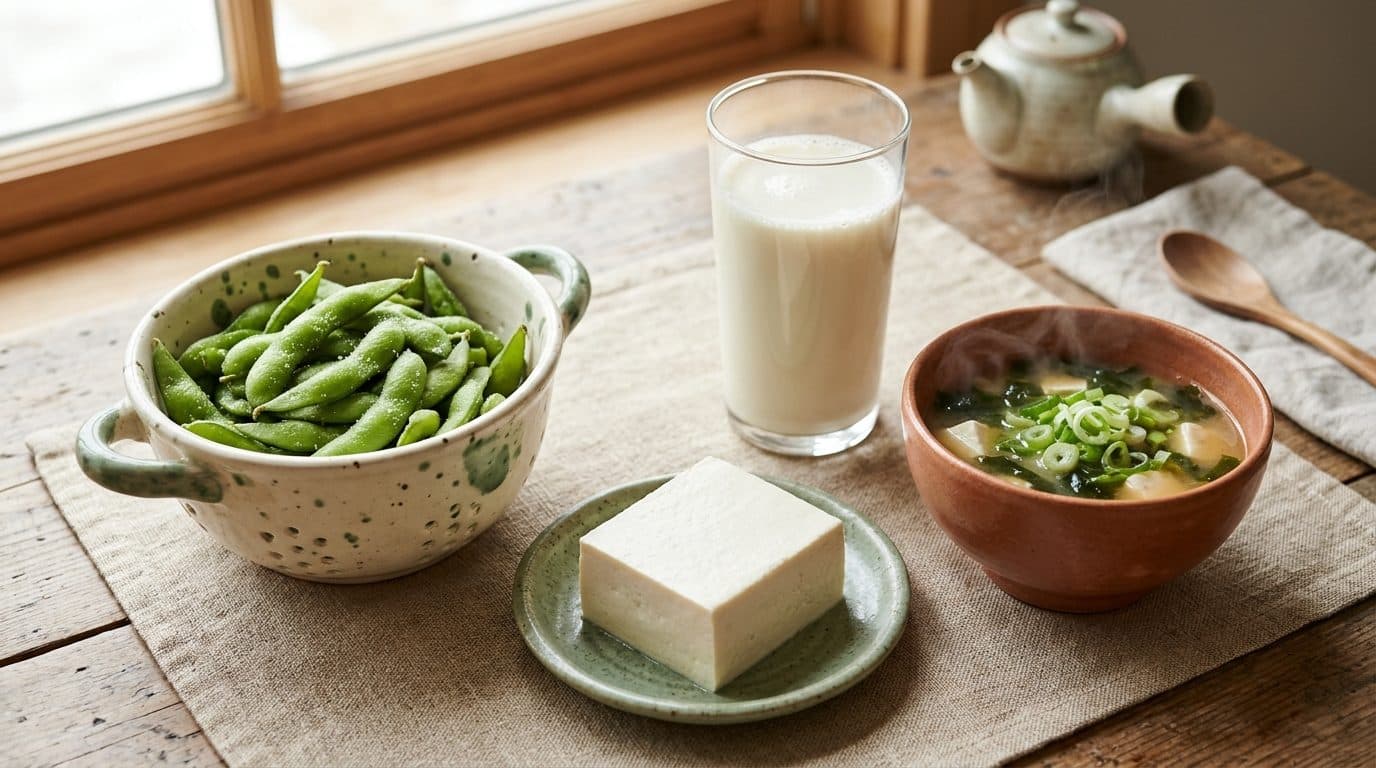
- Versatile: Available in many forms (tofu, tempeh, edamame)
Daily Soy Recommendations for Men
- Moderate intake: 1-2 servings per day is safe and beneficial
- Serving examples: 1 cup soy milk, 3 oz tofu, 1/2 cup edamame
- Total isoflavones: 25-50mg daily (typical Asian intake levels)
Best Soy Foods for Men's Health
- Soy Milk: Convenient protein source, great for smoothies and cereal
- Tofu: Versatile protein that takes on flavors, excellent for stir-fries
- Edamame: Whole soy beans, great snack with fiber and folate
- Tempeh: Fermented soy with probiotics, nutty flavor and firm texture
- Miso: Fermented paste perfect for soups and marinades
- Soy Protein Powder: Concentrated protein for post-workout nutrition
FAQs: Addressing Common Concerns
1. Will soy affect my testosterone levels?
No. Multiple studies show normal soy consumption doesn't significantly affect testosterone in healthy men.
2. Can soy cause gynecomastia (enlarged breasts)?
Extremely rare and only reported with excessive intake (like drinking a quart of soy milk daily). Normal portions are safe.
3. Is soy protein as good as whey for muscle building?
Yes. Soy protein is a complete protein that effectively supports muscle protein synthesis when consumed adequately.
4. Should I choose organic soy products?
Organic options avoid GMOs and pesticides, but both conventional and organic soy are generally safe and nutritious.
5. How much soy is too much?
Stick to 1-3 servings per day. Problems only arise with extreme intake (75+ grams of isoflavones daily).
The Bottom Line: Embrace Soy as Part of a Healthy Diet
Scientific evidence consistently shows that moderate soy consumption is safe and beneficial for men's health.
- No significant impact on testosterone levels
- High-quality, complete protein source
- Potential cardiovascular and prostate health benefits
- Environmentally sustainable protein option
- Versatile and affordable food choice
Action Steps:
- Try incorporating 1-2 servings of soy foods into your weekly meal plan
- Experiment with different soy products to find what you enjoy
- Focus on whole soy foods rather than highly processed versions
- Don't fear soy—embrace it as part of a varied, nutritious diet