Gut Health · Nov 11, 2026
The Gut-Boosting Power of Mushroom Adaptogens
Discover how functional mushrooms like Lion's Mane, Reishi, and Chaga may support gut health and reduce inflammation. Learn about their potential benefits and why clinical trials are still needed for human use.
By Michelle Pearlman, MD, Gastroenterologist & ByteMD co-founder
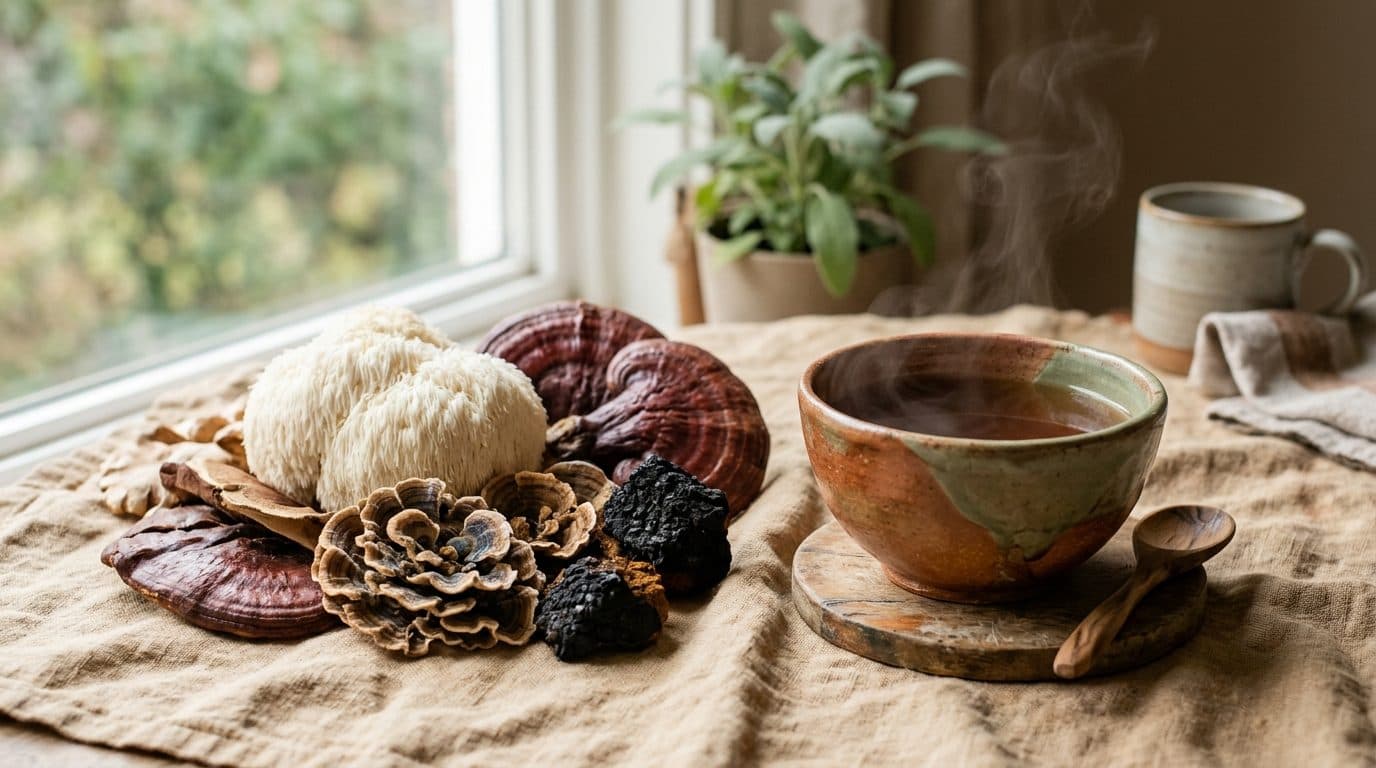
Lion's Mane – The Gut-Brain Connector
Hericium erinaceus (Lion's Mane mushroom) has demonstrated promising effects on gut health and inflammation, primarily attributed to its bioactive polysaccharides. Preclinical studies show that these polysaccharides can modulate gut microbiota composition, enhance intestinal barrier integrity, and reduce inflammatory cytokine production.
In murine models of colitis and ulcerative colitis, Hericium erinaceus polysaccharides downregulate pro-inflammatory mediators such as IL-6, IL-1β, TNF-α, and inhibit key inflammatory pathways including NF-κB, MAPK, PI3K/Akt, and NLRP3 inflammasome activation, resulting in improved clinical symptoms and restoration of intestinal homeostasis.
Key Benefits:
- Enhances memory, focus, and nerve regeneration
- Supports the gut-brain axis
- May reduce gut inflammation in stress-related GI conditions
The Microbiome Connection
Additionally, supplementation with Hericium erinaceus polysaccharides has been shown to increase beneficial gut bacteria (e.g., Lachnospiraceae, Akkermansiaceae, Oscillibacter, Lactobacillus reuteri) and decrease potentially pathogenic species, supporting a healthier microbiome profile. These changes are associated with increased production of short-chain fatty acids and improved tryptophan metabolism, both of which contribute to anti-inflammatory effects and gut barrier function.
Other Powerful Mushroom Adaptogens
Reishi – The Chill Pill Mushroom
- Calms the nervous system
- Balances immune function
- May modulate the gut microbiome and reduce stress-related flares
Cordyceps – The Energy Booster
- Improves energy and oxygen efficiency
- May help reduce GI inflammation
- Supports adrenal resilience and gut motility under stress
Turkey Tail – The Microbiome Feeder & Cancer Supporter
- Contains PSK and PSP: immune-modulating compounds
- Approved in Japan as adjunct therapy for gastric & colorectal cancer
- Powerful prebiotic for Lactobacillus and Bifidobacteria
Chaga – The Gut Lining Protector
- Antioxidant-rich; combats oxidative stress and inflammation
- May protect the intestinal barrier
- Traditionally used for immune and liver support
Clinical Evidence and Considerations
In vitro studies using human monocytes further confirm that Hericium erinaceus extracts, particularly ergosterol, can attenuate LPS-induced production of inflammatory cytokines by direct interaction with LPS, suggesting a mechanism for systemic anti-inflammatory activity.
Important Note: While these findings are robust in animal and cell models, clinical validation in humans remains limited, and standardized dosing regimens have not been established in the medical literature.
The Bottom Line
Overall, current evidence supports the potential of Hericium erinaceus and other mushroom adaptogens as functional food ingredients for gut health and inflammation, but further clinical trials are needed to confirm efficacy and safety in humans. These mushrooms show promise as complementary approaches to conventional care, particularly for supporting the gut-immune axis and managing inflammation-related digestive conditions.
Next Steps: Consult with your healthcare provider before adding mushroom supplements to your regimen, especially if you have existing health conditions or take medications.